Eat Well With MS — Without Overthinking or Exhausting Yourself
Immediate access. Watch at your own pace

If Food Feels Harder Than It “Should,” You’re Not Alone
You might recognize these thoughts:
You plan to cook dinner, but by evening, your energy has completely run out — even deciding what to eat feels like too much.
You've pushed through meal prep on a good day, only to pay for it with exhaustion or a symptom flare afterward.
Basic tasks like chopping, opening jars, or stirring are frustrating or even risky when your hands aren't cooperating
Eating in a way that supports your health and helps you feel your best is truly a priority for you but the planning, shopping, timing, and following a recipe can sometimes feel like the heaviest lift, even more so than the cooking itself.
Grocery shopping alone can wipe out all the energy you had for actually cooking the meal — and if that sounds familiar, you're not doing anything wrong.
Let's Name the Real Problem (and it's not you)
Most nutrition advice aimed at people with MS is built around rules, restrictions, and strategies to stay "on track." But what if eating well has nothing to do with discipline or trying harder?
The problem was never your motivation. It's that rigid, rule-based nutrition advice simply wasn't designed for an unpredictable nervous system.
You are not the problem. The rules are.
When MS can shift your energy, balance, vision, or heat tolerance from one hour to the next, pushing through isn't the answer. The goal is to adapt — to build an approach that works with your body, not against it.
What If Eating Well Didn’t Rely on Willpower or Symptom-Free Days?
The Low Spoon Kitchen is a 60-minute nutrition workshop designed for people with MS who need meals that are doable when energy, focus, or symptoms change.
This is not a meal plan.
There are no rigid rules and no forbidden foods.
It’s a 5-step system called the Spoon-Smart Framework™ — designed specifically to help people with MS nourish themselves with less pressure and more ease, even on low-capacity days.
The Spoon-Smart Framework™
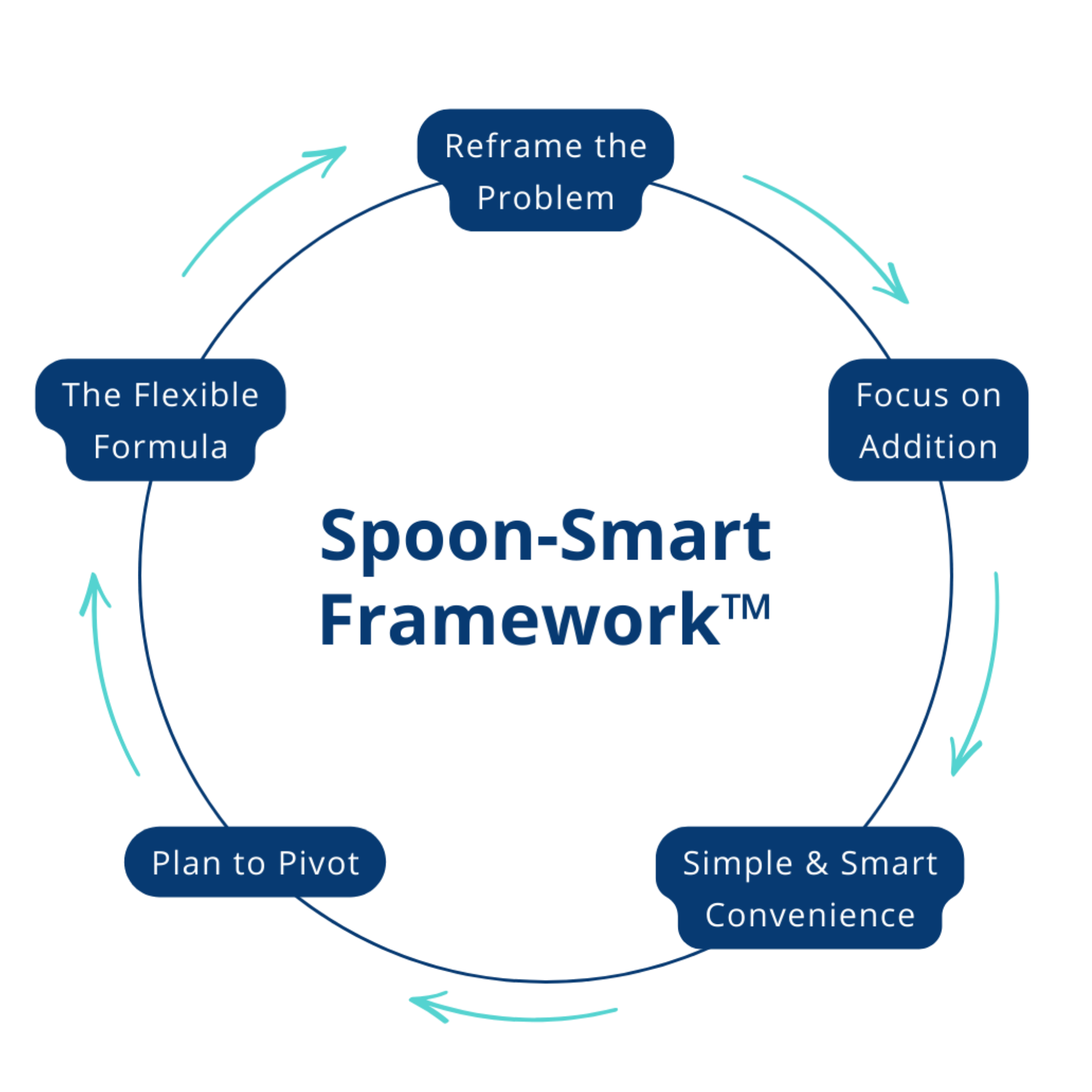
A 5-step system designed to reduce pressure, decision fatigue, and effort — while helping you nourish yourself more consistently.
Reframe the Problem
Adapt the how
- not the food,
and not
yourself.
Focus on Addition
Support nourishment without restriction or diet overhauls.
Smart Convenience
Strategic. Supportive. Sustainable. Shortcuts that work with your body, not against it.
Plan to
Pivot
When energy drops,
you won’t
have to start
from zero.
The Flexible Formula
Build a flexible system
that adapts
to capacity.
What This Workshop Is Designed to Do
Byt he end of this workshop, you’ll have:
A reframe that takes the blame off you and puts it on the unrealistic rules that weren't built for the lived MS experience.
A focus on adding foods to your meals this month, not five things you're trying to avoid.
A personalized convenience toolkit you can use to make any meal easier without sacrificing nutrition.
Three Plan B meals pinned to your fridge for the days when you are all out of spoons.
A flexible meal formula to use on good days, bad days, and everything between.
No tracking.
No complicated rules.
No pressure to “do it perfectly.”
This workshop lowers the bar at dinnertime — so meals feel manageable, supportive, and doable in real life withMS.
What Changes When Meals Are Built Around Capacity
You stop starting from scratch every day
You have meals that still work when energy drops or symptoms flare
You carry less guilt about doing it “right”
Eating well starts supporting you — instead of asking more from you

What You’ll Learn Inside the Workshop
Eat well when energy and symptoms are unpredictable
Learn how to adapt how meals happen day to day, without changing what you eat or blaming yourself
Reduce decision fatigue and mental load around meals
Simplify food decisions so eating takes less thinking, planning, and energy.
Use convenience foods and shortcuts confidently — without guilt or sacrificing nutrition
Discover how shortcuts can support nourishment and reduce effort, not lower standards.
Create “good enough” meals and backup options for low-capacity or flare days
Build reliable fallbacks so you’re never starting from zero when energy drops.
Stop starting over every time symptoms change
Learn how to adjust your approach without scrapping everything you’ve already built.
Build a gentle meal rhythm based on capacity, not willpower or motivation
Create a flexible structure that works on both higher- and lower-energy days.
When you join The Low Spoon Kitchen, you’ll receive:

A 60-minute guided workshop
Walk through the five-step Spoon-Smart Framework™ in your own time. Watch it in one sitting, or break it up across hard days — the lessons are short by design. Lifetime access, so you can revisit any step whenever you need a reset.
The Spoon Smart Framework™ Workbook
A get-it-done workbook that turns the framework into action. Every section does something specific. The workbook includes the resources below.

Quiz: How Spoon Friendly is Your Kitchen?
See exactly which steps in the workshop will help you most, so you can start where it matters.
Symptom and Systems Map
A visual map of the forces shaping your food choices: MS symptoms, health conditions, and real life. Where they overlap is your nutrition reality — and why generic advice never fits.
Addition Action Plan
Focus on what your body may be missing rather than what you need to cut out. Identify one meaningful nutrient gap and choose a single, realistic step to work on this month—no full diet overhaul required.
Make it Easier Toolkit
Build your personal convenience toolkit: the shortcuts, foods, and tools that actually work for your body and your kitchen.
Done-for-You Plan B Meal Examples
Low-spoon meal ideas you can use, adapt, or rotate to reduce decision fatigue on hard days.
Fridge-Ready Plan B Meal Card
A visible list of go-to, low-effort meals to rely on when energy drops, so you’re never starting from zero.
Flexible Meal Formula
Expand your Plan B foundation into a flexible formula that adapts to your energy and keeps you prepared no matter what the day brings.
Everything is designed to be low effort, practical, and supportive.
How each of these resources Work Together
The Spoon-Smart Framework™ gives you the structure.
The workshop walks you through how to use it.
The guides and tools reduce effort, decisions, and planning load.
Plan B supports keep you nourished when capacity drops.
The flexible meal formula helps everything adapt week to week.
Together, they create a meal approach that supports you across good days, hard days, and everything in between.
Is This Workshop Right for You?
This Is For You If:
Live with MS and find meals harder when energy, focus, or symptoms change
Feel stuck in a cycle of overwhelm and starting over
Want eating well to feel more doable — without lowering nutrition standards
Are open to adapting how meals happen instead of blaming yourself at $0)
This workshop may not be a good fit if you’re looking for:
A specific diet, regimen, or protocol
In-depth nutrition science or research explanations
Strict rules, tracking, or rigid meal plans
This workshop focuses on the HOW with practical, flexible strategies that make eating well work in real life with MS.
About Your Guide
Mona Bostick, RDN, LDN, MSCS, is a registered dietitian specializing in Multiple Sclerosis nutrition for over 10 years — and has lived with relapsing-remitting MS for nearly 20.
She created the Spoon-Smart Framework™ after watching people with MS struggle under the weight of restrictive, unrealistic food rules.
Her work is grounded in evidence, lived experience, and the belief that nourishment should support real life — not fight it.

Frequently Asked Questions
How long will I have access to the workshop?
Lifetime access. Move through the workshop at a pace that works best for your energy and schedule. Watch it again during a flare, come back to it whenever you need a refresher. The course is yours.
Can I take the workshop if I don’t live in the United States?
Yes. As long as you have internet access, you can join from anywhere in the world.
Is this workshop appropriate if my energy is very limited or unpredictable?
Yes. This workshop is designed specifically for fluctuating capacity, and everything is taught with flexibility and adaptation in mind.
Do I need to enjoy cooking or have strong cooking skills?
No. This workshop focuses on meal planning systems and decision-making, not cooking techniques. Convenience foods and low-effort meals are fully supported.
Will you be providing clinical nutrition guidance?
No. This is a meal planning workshop, not a clinical nutrition program. Nutrient-dense foods are discussed at a general level, without prescriptions or rigid rules.
Will I need to purchase specific groceries or ingredients?
No. You won’t be asked to follow a product-specific shopping list or overhaul your pantry. The tools are designed to help you work with foods you already use, in ways that support real-life capacity.
What if I want more support?
You’re welcome to ask questions in the MSBites community, where I’m active regularly. Monthly office hours are available on the second Wednesday of each month, and private 1:1 support is also an option.
A 60-Minute Workshop to Make Food Feel More Manageable with MS
Eating well with MS doesn’t have to feel hard.
It works best with an approach that adapts to unpredictability — replacing rules and pressure with flexibility and support.
The Low Spoon Kitchen was created to do exactly that, gently and realistically.