
What Is the Best Diet for Multiple Sclerosis? An Honest, Evidence-Based Answer
The Short Answer — And Why It Requires More Than a One-Line Response
If you've been living with MS for more than fifteen minutes, someone has probably told you what to eat.
Maybe it was a well-meaning family member who forwarded a link to a protocol that "reversed" someone's symptoms. Maybe it was a Facebook group warning you to eliminate gluten, dairy, nightshades, and, apparently, joy. Maybe it was an influencer with very good lighting and a very confident opinion about your nervous system.
Here's the honest answer to the question everyone is asking:
There is no diet that has been proven to cure, reverse, or stop the progression of multiple sclerosis.
There. That's the short version.
But if you close this tab now, you'll miss something important — because that answer, while accurate, is only half the story. The other half is this: what you eat genuinely matters when you have MS. Just not in the way most of the internet will tell you it does.
The distinction between those two statements is exactly what this article is about. Because if you understand it clearly — really clearly — you can stop chasing dietary promises that don't deliver, stop feeling guilty when a protocol doesn't fix something it was never capable of fixing, and start making food choices that actually support the life you're living with this disease.
That's a better deal. Let's get into it.

Quick Takeaways
No diet has been shown to cure, reverse, or modify the MS disease process in clinical trials.
A balanced, flexible, nutrient-dense eating pattern genuinely supports health with MS.
Treating MS is not the same as supporting the person living with MS — and that distinction changes everything.
Some popular MS diets carry real risks that rarely get discussed.
The "best" diet for your MS may actually be one that treats another health condition you have.
Table of Contents
What Is the Best Diet for Multiple Sclerosis? An Honest, Evidence-Based Answer
The Short Answer — And Why It Requires More Than a One-Line Response
Why Diet Feels So Important After an MS Diagnosis
What Conventional MS Treatment Actually Does
What Diet Can and Cannot Do for MS
Why There Is No Proven "MS Diet"
Inflammation, MS, and Diet — Why the Biology Is More Complicated Than You've Been Told
The Mediterranean Diet: The Most Evidence-Based Option
Why Treating Comorbidities May Matter More Than Following an MS Diet
The Hidden Risks of Restrictive MS Diets
The Most Important Principle: Flexibility Over Perfection
How to Choose the Right Eating Pattern for You
Frequently Asked Questions About Diet and Multiple Sclerosis
Why Diet Feels So Important After an MS Diagnosis
Multiple sclerosis is, among other things, a masterclass in loss of control.
It is unpredictable. It relapses without warning and remits on its own schedule. It disrupts careers, relationships, plans — the version of your future you thought you were building. The medications used to treat MS work to reduce relapses, limit new inflammation, and delay progression. They are an essential tool for many people living with this disease. But they are not a cure, and they carry their own risks and side effects.
Into that vacuum of control walks the MS diet industry, with a message that is specifically engineered to reach you at your most vulnerable:
"You can fix this with food."
Promising certainty in a disease defined by uncertainty.
The appeal is completely understandable. Food is something you touch every day. It feels controllable. It feels like action at a moment when so much feels passive. And when someone who looks healthy and confident tells you that eating a certain way stopped their progression — or reversed their symptoms — of course that lands.
Of course it does.
I understand that pull from both sides of the table. As someone who has been living with relapsing-remitting MS since 2008, I have sat with that same desire for a simple answer. As a registered dietitian specializing in MS nutrition, I have watched people spend years, significant sums of money, and enormous cognitive and emotional energy on dietary protocols that were never going to deliver on their promises.
This article is not here to take hope away from you. It is here to redirect it somewhere it can actually go.
What Conventional MS Treatment Actually Does
Before we talk about what diet can and can't do, it's worth briefly naming what conventional medicine has actually delivered — because the frustration with it is real, and naming that frustration honestly is more useful than pretending it doesn't exist.
Disease-modifying therapies (DMTs) are the cornerstone of MS management. Current DMTs reduce relapse rates, slow disability progression, and limit new disease activity visible on MRI. That is meaningful. That is real. Several of these medications have changed the trajectory of MS in ways that would have been unimaginable thirty years ago.
And yet. They do not cure MS. They do not repair damage that has already occurred. They come with costs — financial, physical, and emotional — that are not trivial. Managing side effects, navigating insurance, and living with the psychological weight of a chronic disease treatment regimen is exhausting in ways that are difficult to describe unless you live it.
Your MS care team — neurologist, nurse practitioner, physical therapist, occupational therapist, pharmacist, behavioral health specialist, and yes, registered dietitian — works within conventional medicine to manage a disease that does not yet have a cure.
That reality, combined with the very human need for agency, is precisely why so many people start looking for something — anything — they can control. Food is usually the first place they land. The frustration with conventional medicine is valid. But being frustrated with conventional medicine doesn't automatically make an alternative approach safer or more effective. Each one still has to stand on its own evidence.
What Diet Can and Cannot Do for MS
This is the section that most MS diet articles skip entirely, and it is the most important thing in this piece.
There is a difference between treating a disease and supporting the person living with the disease. In MS, that difference is everything.
What nutrition cannot do:
Cure MS
Reverse demyelination or repair damaged nerve fibers
Halt the immune-mediated process that leads to new lesions in the brain and spinal cord
Reduce relapse rates in the way a DMT does
Replace disease-modifying therapy
Directly alter the MS disease process
What nutrition genuinely can do:
Support cardiovascular health, which matters enormously in MS, where cardiovascular conditions are linked to faster disability progression
Protect bone density — at risk from corticosteroid use and reduced mobility
Support gut health and microbiome diversity
Reduce systemic inflammation — with meaningful caveats (we'll get to those)
Improve energy levels when nutritional deficiencies are contributing to fatigue
Support metabolic health and body composition
Reduce the risk of comorbid conditions that actively accelerate MS disability
Improve quality of life
That second list is not small. It is not a consolation prize.
Think of it this way: you cannot change the weather, but you can absolutely decide whether you own an umbrella, a decent coat, and a pair of boots that don't leak. Nutrition is the gear. MS is the weather.
But it is support for the person living with MS. It is not a treatment for the disease.
That distinction changes what good dietary guidance looks like. It changes what goals are realistic. And it changes what you should feel when a dietary change doesn't stop your MS — which is not failure, because that was never a reasonable expectation.
The goal of nutrition in MS is not to cure the disease. It is to support the overall well-being and quality of life of the person living with it. And that is no small thing.
If you've just been diagnosed and are looking for where to start, see Newly Diagnosed with MS? What You Actually Need to Know About Diet.
Why There Is No Proven "MS Diet"
The term "therapeutic diet" has a specific clinical meaning that gets lost in most MS nutrition conversations. Stay with me here — this distinction is going to matter more than you'd expect.
A therapeutic diet is a prescribed clinical nutrition intervention that modifies food or nutrient intake to treat a specific medical condition. Examples include a low-sodium diet for hypertension, a consistent carbohydrate diet for blood glucose management in diabetes, and a gluten-free diet for celiac disease — the only treatment, because the mechanism is a direct immune reaction to gluten.
Each follows a clear framework: define the problem, prescribe the intervention, and observe the measurable outcome. The evidence is strong because the dietary change directly alters the disease process.
Multiple sclerosis does not currently have a therapeutic diet because no dietary intervention has been shown, in rigorous clinical trials, to directly modify the MS disease process. The underlying immune-mediated attack on myelin is not driven by a nutrient deficiency, a food sensitivity, or a dietary pattern, and no specific dietary change has been shown to alter it.
This is why, when a neurologist recommends the Mediterranean diet, they are not prescribing it as an MS treatment. They are recommending, to the person living with MS, a generally healthy eating pattern that supports overall health — a good recommendation, but a categorically different one.
Understanding this distinction protects you from spending years on protocols that were never going to deliver what they promised. And it frees you to focus on the dietary changes that actually have evidence behind them — which, as you're about to see, are more powerful than the internet gives them credit for.
Inflammation, MS, and Diet — Why the Biology Is More Complicated Than You've Been Told
"Anti-inflammatory eating" is one of the most-searched phrases in the MS diet space and one of the most misunderstood. To understand why, we have to clarify something that is often oversimplified: not all inflammation in MS is the same.
In relapsing MS, immune cells from the bloodstream cross the blood-brain barrier and enter the central nervous system, triggering acute inflammatory attacks. Most disease-modifying therapies work by reducing this type of immune activity.
Over time, a different pattern can emerge: chronic inflammation that becomes compartmentalized within the CNS itself — meaning it is largely isolated from the bloodstream. This smoldering neuroinflammation contributes to neurodegeneration and is substantially less responsive to both medications and systemic interventions.
Dietary patterns can reduce systemic markers of inflammation (such as CRP and certain cytokines). This is real. The evidence is not in question.
But systemic inflammation and CNS-specific inflammation are only partially connected. Lowering CRP in the blood does not automatically translate into fewer lesions, reduced relapse rates, or halted disability progression. Think of it like a house with a locked room. You can clean the hallway, scrub the kitchen — and the room behind that locked door stays exactly as it was. The CNS has its own inflammatory compartment, largely sealed off behind the blood-brain barrier, and dietary changes do not reach it the same way they reach the rest of the body.
This is why the promise that "anti-inflammatory eating" will control your MS doesn't hold up to scrutiny. Even when the individual foods being recommended are genuinely good choices.
There's one more layer to this: it is the habitual dietary pattern — what you eat consistently over weeks and months — that influences inflammatory markers. A kale salad on Tuesday will not meaningfully lower your CRP. A hot dog at a baseball game in July will not send your inflammation spiraling. It is the totality of what you eat, most of the time, that tells the real story.
For the full explanation of what "anti-inflammatory eating" actually means in practice — including how dietary inflammation is measured and what habitual patterns actually look like — see Anti-Inflammatory Diet for MS: Patterns, Not Protocols.
The Mediterranean Diet: The Most Evidence-Based Option
If you’re looking for a place to start—an eating pattern backed by consistent, peer‑reviewed evidence in MS—Mediterranean‑style eating is a strong choice.
Let’s be clear about what this means. The Mediterranean diet isn’t a product you purchase or a program you sign up for. It’s a pattern of eating that researchers have studied extensively and labeled with a geographic name. The name came after the evidence; the evidence did not confirm something uniquely Mediterranean.
At its core, the Mediterranean diet reflects a whole-food–forward approach that emphasizes plant foods and healthy fats.
It's balanced. It's varied. It's also not proprietary.
It is essentially "generally healthy eating" — with a much better marketing department.
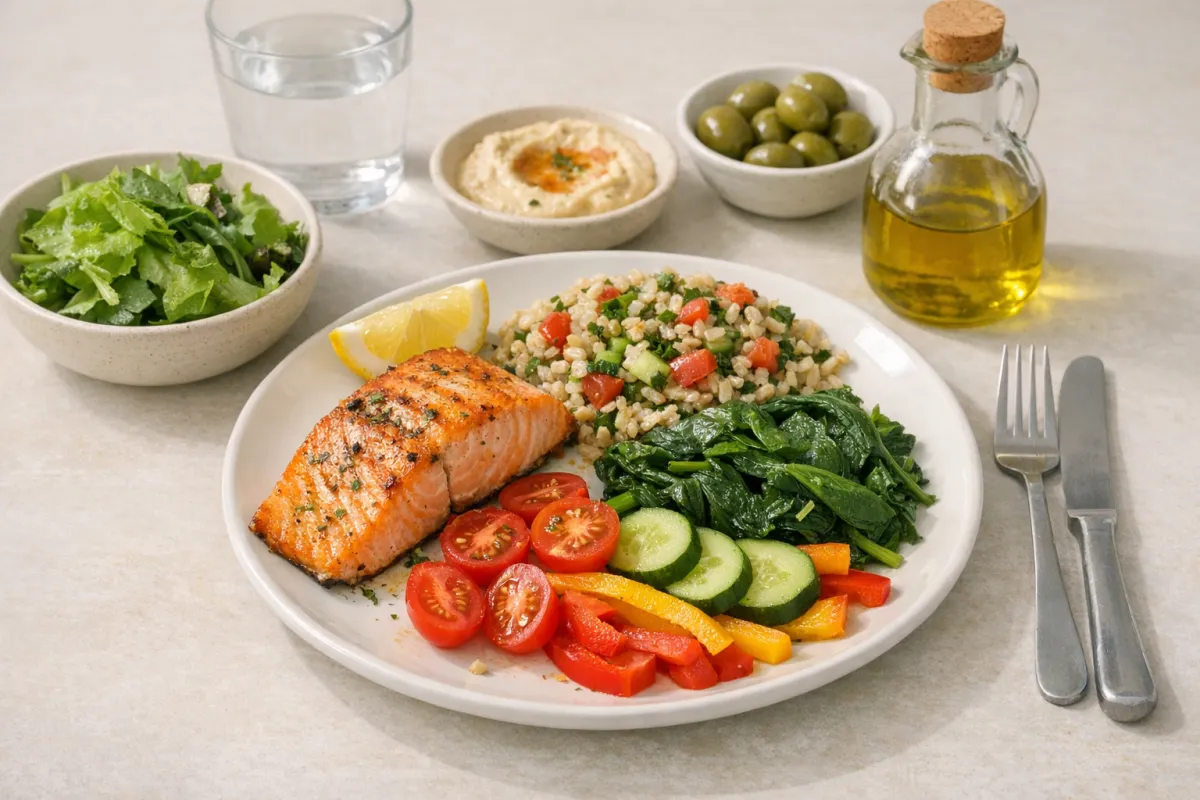
What it actually looks like:
Plenty of vegetables and fruits, eaten consistently
Whole grains instead of refined ones
Legumes — beans, lentils, chickpeas — regularly
Olive oil as your primary fat
Fish and seafood several times a week
Nuts and seeds
Modest amounts of dairy and poultry
Red meat occasionally, not daily
Minimal ultra-processed food
Notice what's not on that list: a long list of forbidden foods, expensive specialty ingredients, or rigid rules that fall apart on a bad fatigue day.
But practicality alone isn't enough. What does the research actually show?
What the evidence shows for MS specifically:
Several randomized controlled trials have found that Mediterranean-style eating reduces fatigue severity and improves quality of life in people with MS. Studies have shown reductions in systemic inflammatory markers, including CRP and IL-6. Observational research has linked higher Mediterranean diet adherence to lower levels of measured disability on neurological exams. One finding puts a number on it. A large study of 563 people with MS found that each one-point increase in Mediterranean diet adherence was associated with 15% lower odds of functional impairment (Katz Sand et al., 2023), though, as with all observational research, this shows association rather than proof of causation.
A randomized trial comparing a modified Mediterranean diet to a traditional Iranian diet in 180 people with relapsing-remitting MS found significant reductions in relapse rate and inflammatory markers over six months (Mirashrafi et al., 2021). Another randomized controlled trial found that a Mediterranean-like diet significantly reduced fatigue scores compared to a standard healthy diet (Moravejolahkami et al., 2024).
What it hasn't shown: It has not been proven to stop demyelination, prevent relapses reliably, or halt disability progression in controlled trials. When your neurologist recommends the Mediterranean diet, they're recommending support for your overall health — not prescribing an MS treatment. That distinction is worth holding onto.
Among the dietary patterns studied in MS, the Mediterranean pattern appears to have the lowest practical barriers. It's flexible, affordable, nutritionally complete, and doesn't require eliminating entire food groups. On a high‑fatigue day, a scoop of hummus, some sliced vegetables, and a warm whole‑grain pita is a perfectly Mediterranean meal. That counts for a lot when you're managing an unpredictable disease.
How Popular MS Diets Compare
There are more named "MS diets" than there are seasons of Grey's Anatomy, and they are not all created equal. Here is a plain-language summary of the major ones. None of these diets has been shown to modify the MS disease process in randomized controlled trials. Most show some improvement in fatigue or quality of life. The differences lie in restrictiveness, nutritional risk, and strength of evidence.
Wahls Protocol
Developed by Dr. Terry Wahls, a physician with progressive MS. Three phases of increasing restriction, culminating in a ketogenic approach that eliminates grains, legumes, dairy, and nightshades while emphasizing organ meats and nine cups of specific vegetables daily. The WAVES trial — the most rigorous test to date — found both the Wahls and Swank diets significantly reduced fatigue, with no superior outcome for the more restrictive approach (Wahls et al., 2021). The Wahls diet showed a statistically significant improvement in mental quality of life, whereas the Swank diet did not. No disease modification demonstrated.
Swank Diet
One of the earliest MS diets, the Swank diet, was developed in the 1950s. Very low saturated fat (under 15g/day), emphasizes lean protein, whole grains, and fish. The WAVES trial found it improved fatigue and quality of life — the same result as the far more restrictive Wahls Protocol (Wahls et al., 2021). Resembles heart-healthy eating more than a therapeutic MS diet.
Ketogenic Diet
A high-fat, very low-carbohydrate diet that induces ketosis. In an 18-month randomized controlled trial — the most rigorous MS keto study to date — the primary MRI outcome measure showed no significant difference between dietary groups (Bahr et al., 2025). Some modest cognitive and cardiometabolic benefits appeared as secondary findings. Ketogenic diets can raise LDL cholesterol in many people — the NAMS trial didn't observe this, but the general pattern is well-documented and particularly relevant given cholesterol's association with higher relapse rates in MS.
OMS (Overcoming MS)
A comprehensive lifestyle program combining an extremely low-fat, plant-based diet with vitamin D, omega-3s, exercise, and stress reduction. The evidence behind it comes primarily from the observational HOLISM study, which can show associations but cannot prove that the diet itself caused the outcomes, and no large randomized controlled trial has filled that gap. It's worth noting that the lifestyle components (exercise, stress reduction, vitamin D, omega-3s) have strong evidence bases of their own, independent of the dietary restrictions. Those restrictions are substantial enough to require structured restaurant guidance, which gives some indication of the practical complexity of long-term adherence.
AIP (Autoimmune Protocol)
An elimination diet removing grains, legumes, dairy, eggs, nuts, seeds, and nightshades. No high-quality randomized controlled trials support its use in MS. High nutritional risk due to the elimination of many foods.
Gluten-Free / Dairy-Free
No strong evidence that either improves MS outcomes in people without a diagnosed intolerance or allergy. Gluten-free diets can be nutritionally worse if substitutions are poor. Dairy elimination without calcium and vitamin D replacement is a genuine bone health risk in a population already at elevated risk for bone loss.
For an in-depth review of every major MS diet — safety concerns, nutritional risks, cost and sustainability, and who might and might not benefit — see MS Diets Explained: Wahls, Swank, Mediterranean, and More.
Why Treating Comorbidities May Matter More Than Following an MS Diet
Here is the part of the MS diet conversation that almost never gets the attention it deserves.
Approximately two-thirds of people with MS have at least one additional chronic health condition. Depression, anxiety, hypertension, dyslipidemia, diabetes, and cardiovascular disease are all well-documented in people with MS, and obesity — whether more or less prevalent than in the general population, depending on the study — compounds their impact.
And those comorbidities are not just coexisting inconveniences — they actively worsen the MS disease course. Large cohort studies over the past decade have consistently shown this pattern.
The numbers are striking. Having three or more comorbidities increases the risk of MS disease activity — meaning relapses or new MRI lesions — by 14% (Salter et al., 2024). Having two or more cardiometabolic conditions increases that risk by 21%. Hypertension alone is associated with dramatically faster progression. In one 20-year cohort study, hypertensive MS patients were roughly 44% more likely to reach early disability milestones and 83% more likely to need walking assistance than those without hypertension (Dagan et al., 2016).
This is the part where diet becomes genuinely powerful — not as an MS treatment, but as a treatment for the conditions that are making your MS worse.
If you have hypertension, the DASH diet has decades of strong evidence for lowering blood pressure. Observational studies suggest that better blood pressure control is associated with slower progression to disability milestones.
If you have dyslipidemia, a heart-healthy eating pattern may significantly reduce your risk of relapse associated with high cholesterol.
If you have insulin resistance or type 2 diabetes, understanding how your food choices affect your blood glucose is worth the effort. Improving blood glucose control may reduce your risk of faster disability progression.
If you have depression — the single largest driver of reduced quality of life in MS — dietary patterns associated with better mental health outcomes have real evidence behind them.
None of these interventions treats MS directly. They are treating conditions that are making your MS worse. And that distinction matters less than you might think, because the outcome — slowing the pace of disability and improving quality of life — is the same.
Ask yourself — and your healthcare team: Are your blood pressure, cholesterol, and fasting glucose being actively monitored and managed? And is your dietary approach shaped by your full health picture, or only by your MS?
The Hidden Risks of Restrictive MS Diets
Every MS diet article lists the potential benefits. Almost none of them list the risks. That omission is not neutral — it's misleading.
Nutrient deficiencies. When entire food groups are eliminated — dairy, grains, legumes, nightshades, eggs — nutritional gaps can follow unless those nutrients are carefully replaced. Calcium, vitamin D, B vitamins, iron, zinc, and adequate protein are all at risk depending on the elimination approach. These nutrients are particularly important for bone health, energy, immune function, and muscle preservation in MS.
Muscle loss. Inadequate protein — a common consequence of poorly planned elimination diets — accelerates muscle wasting that is already a concern in people with MS due to reduced activity and disease-related changes in body composition.
Disordered eating and orthorexia. Rigid food rules, extensive lists of "forbidden" foods, and messaging that frames every eating choice as either fighting or feeding your disease can create an environment that increases risk for disordered eating behaviors. Orthorexia — a pathological preoccupation with eating only "approved" foods — is a real clinical concern in chronic illness communities where control over food can feel like control over disease.
Social isolation. Food is culture. It is celebration, comfort, and connection. A dietary protocol that makes it difficult to eat with family, attend a dinner party, or grab lunch with a colleague carries a real quality-of-life cost — one that rarely appears in the promotional messaging. To suggest that fuel is the only role food plays in our lives is akin to saying that sex is only for reproduction. Joy is an essential ingredient in a healthy eating pattern.
Financial burden. Several prominent MS dietary protocols are expensive to follow because they require specialty ingredients, testing, and supplements. I've worked with people spending hundreds of dollars a month on supplements alone while struggling to afford actual food. The financial and cognitive load falls on people who are already managing a demanding, expensive disease. Eating well with MS does not require expensive ingredients or specialty products.
The guilt problem. When a protocol fails to deliver what it promised — when your MS progresses despite adherence, or when life makes perfect adherence impossible — the cultural messaging around strict dietary compliance can leave people feeling as though they didn't try hard enough. That framing does real psychological harm. MS progression is not a compliance failure. It is the disease doing what it does.
None of these risks means that thoughtful dietary change is inappropriate. They simply mean that dietary interventions deserve the same risk–benefit analysis as any other intervention in MS care.
The Most Important Principle: Flexibility Over Perfection
Here is an argument you will not find in many MS nutrition resources: flexibility is not a concession to imperfection. It is a prerequisite for sustainability in a disease defined by unpredictability.
Consider what MS does to the practical business of feeding yourself. MS fatigue — neurological and unpredictable — can make grocery shopping, meal planning, and cooking genuinely impossible on bad days. Cognitive changes affect the executive functions required for meal planning. Spasticity and motor impairment can make the physical act of cooking difficult in ways that healthy people don't think about.
The MS-specific diets being promoted most loudly are designed for a body that can manage those demands. Many bodies with MS cannot — and cannot on many days, even when they could on others.
This is not a willpower problem. This is a disease problem.
When it comes to fatigue — one of the most common and debilitating symptoms in MS — the most restrictive diet studied, with its nine-cup vegetable requirement, organ meats, multiple elimination phases, and ketogenic final stage, did not outperform a much simpler heart-healthy eating pattern (Wahls et al., 2021). That is the nutritional equivalent of training for an ultramarathon and finishing at the same time as the person who went for a brisk walk.
An eating pattern that works only on good days is not a durable strategy. The goal is not perfection. It is nourishment, applied flexibly, within the realities of an unpredictable disease. A plan for meals — not a meal plan. One gives you structure. The other gives you rules.
There is no wagon. You cannot fall off. There is just eating — imperfectly, across a life with an unpredictable disease — giving your body what it needs on the terms available to you today.

How to Choose the Right Eating Pattern for You
Instead of starting with a branded MS protocol and trying to fit your life into it, start with your actual health picture. If there is no single evidence-based MS diet, that does not mean the way you eat is irrelevant. It means the starting point needs to shift.
What follows is not a protocol. It's a way of thinking — which, if you've read this far, you'll recognize as the point.
Know what you're managing. Before changing your diet, get clear on your numbers. When did you last check your blood pressure? Your cholesterol panel? Your fasting glucose? Have you been screened for depression? These questions may matter more for your long-term MS trajectory than the name of the diet you follow.
Match the approach to the condition. If you have high blood pressure, DASH-style eating has the strongest evidence. High cholesterol? Heart-healthy, fiber-rich patterns. Insulin resistance or type 2 diabetes? An approach that improves blood glucose control. Bone health concerns? Adequate calcium and vitamin D, and avoiding unnecessary dairy restriction.
Add before you eliminate. Most people fall short on vegetables, fruits, whole grains, fish, and nuts before any restrictions are even considered. Ask yourself honestly whether you're meeting your nutrient needs before removing anything. Addition is often more beneficial — and far more sustainable — than elimination.
Plan for the hard days. MS doesn't care about your dinner plans. Infrastructure matters more than willpower: pre-cooked freezer meals, washed produce ready to grab, shelf-stable staples, backup meals that fit your overall pattern. A frozen meal on a high-fatigue day isn't a failure. It's a strategy.
Evaluate claims carefully. Ask what outcome is being claimed and what evidence supports it. Then ask a harder question: what outcomes were actually measured, and who stands to gain from your belief that the protocol works? Consider whether the approach is sustainable across fluctuating energy, mobility, and cognitive function. If it only works on your best days, it doesn't work.
Work with someone who knows both worlds. A registered dietitian with experience in MS and chronic disease management can translate general evidence into an approach that fits your specific health picture, medications, and life.
Frequently Asked Questions About Diet and Multiple Sclerosis
Can diet cure multiple sclerosis?
No. There is currently no diet shown in clinical trials to cure or reverse MS. The highest-quality systematic reviews confirm that, while dietary interventions can improve symptoms such as fatigue and quality of life, they do not demonstrate effects on the underlying disease process (Snetselaar et al., 2023; Guerrero Aznar et al., 2022).
Can diet slow MS progression?
Current evidence has not demonstrated that any dietary pattern consistently alters long-term disability progression, reduces relapse rates, or decreases MRI lesion activity in MS. Some lifestyle programs that combine diet with exercise, stress reduction, and sleep show associations with better outcomes, but the specific contribution of diet has not been established.
Does the Wahls Protocol work for MS?
That depends on what you mean by "work." The Wahls Protocol has been shown to improve fatigue and quality of life in short-term studies (Wahls et al., 2021). It has not been shown to stop MS progression, prevent relapses, or reduce MRI lesion activity. And in the fatigue trial, where it was directly compared to a simpler heart-healthy diet, both produced similar improvements. Its restrictive design can increase risk for nutritional deficiencies if not carefully managed, and its demands are particularly challenging for people managing significant MS symptoms.
Should I eliminate gluten if I have MS?
Not unless you have diagnosed celiac disease. There is no strong evidence that gluten worsens MS or affects disease activity. Routine elimination increases nutritional risk without a demonstrated benefit specific to MS. If gluten is something you're worried about, I unpack the research in detail — including who actually needs to eliminate it and who likely doesn't in this podcast episode on gluten and MS.
Should I eliminate dairy if I have MS?
There is no strong clinical evidence that dairy worsens MS or drives disease progression in humans. The idea rests largely on a molecular mimicry hypothesis that has yet to be tested in humans. If dairy is eliminated, adequate calcium and vitamin D from other sources become essential, as bone health is already a concern in MS.
Is the Mediterranean diet an MS treatment?
No. And this distinction matters. It supports overall health and has the strongest evidence base of any dietary approach for MS symptom management, particularly fatigue and quality of life. When neurologists recommend it, they are recommending it as overall health support, not an MS-specific treatment.
Can diet help with MS fatigue?
Yes. Multiple randomized controlled trials and a meta-analysis have found that dietary interventions reduce fatigue in people with MS (Snetselaar et al., 2023). Eating regularly, meeting calorie and protein needs, supporting gut health, staying hydrated, and correcting nutrient deficiencies all contribute. It's worth noting that MS fatigue has both primary causes (driven by the disease itself) and secondary causes (like poor sleep, nutritional gaps, or deconditioning) — and diet primarily targets the secondary kind. That said, secondary fatigue is a major contributor for most people, and dietary change is a lever with real evidence to back it up.
What about supplements?
Vitamin D is the most studied nutrient in MS and the one for which supplementation is most commonly indicated. Deficiency is common and associated with worse outcomes. Omega-3s have reasonable evidence for cardiovascular support. Beyond these, the supplement industry in the MS space is substantially ahead of the evidence.
What is the single most important dietary change I can make?
Eat more. More vegetables, more fruit, more whole grains, more legumes, more fish. For most people with MS, the nutritional gap is not about what they're eating too much of — it's about what they're not eating enough of. Addition is often more powerful than restriction. Start there.
If there is no proven MS diet, does that mean diet doesn't matter?
No. Diet matters for cardiovascular risk, metabolic health, bone strength, and energy levels — all of which directly influence how MS behaves over time. The fact that no single diet treats MS doesn't make diet irrelevant. It makes the right dietary approach one of the most underused tools in health with MS.
Newly diagnosed and feeling overwhelmed by all the diet advice? See Newly Diagnosed with MS? What You Actually Need to Know About Diet.
Where This Leaves You
Food supports your health. It does not treat your MS.
That is not a small thing to say — and it is not a small thing to hear. It means the most evidence-aligned approach to eating with MS is not a protocol, an elimination plan, or a branded philosophy. It is a balanced, varied, flexible, nutrient-dense pattern that fits your life and accounts for the reality of living with this disease — while leaving room for food that nourishes you in ways that go beyond nutrients alone.
You do not need extreme restriction. You do not need a complicated set of rules. You do not need to spend money you may not have on a protocol that lacks strong evidence for disease modification. And you do not need to feel guilty on the days — and there will be days — when eating well is not the most available option.
What you do need is accurate information, realistic expectations, and a nutritional approach that works with the full, complex reality of your life with MS.
Here's what it comes down to: no diet cures MS. But eating well — flexibly, sustainably, in a way that fits your actual life with this disease — is one of the most meaningful things still in your hands.
References
Bahr, L. S., Bellmann-Strobl, J., Koppold, D. A., et al. (2025). Fasting, ketogenic, and anti-inflammatory diets in multiple sclerosis: A randomized controlled trial with 18-month follow-up. BMC Nutrition, 11(1), 167. https://doi.org/10.1186/s40795-025-01156-5
Crippes, L. J., Saxby, S. M., Shemirani, F., et al. (2023). Diet-induced changes in functional disability are mediated by fatigue in relapsing-remitting multiple sclerosis: A secondary analysis of the WAVES randomized parallel-arm trial. Multiple Sclerosis Journal – Experimental, Translational and Clinical, 9(4), 20552173231209147. https://doi.org/10.1177/20552173231209147
Culpepper, William J., and Mitchell T. Wallin. “Comorbidity Increases the Risk of Hospitalizations in MS: Prevention Opportunities.” Neurology 84, no. 4 (2015): 335–36. https://doi.org/10.1212/WNL.0000000000001194.
Dagan, A., Gringouz, I., Kliers, I., & Segal, G. (2016). Disability progression in multiple sclerosis is affected by the emergence of comorbid arterial hypertension. Journal of Clinical Neurology, 12(3), 345–350. https://doi.org/10.3988/jcn.2016.12.3.345
Guerrero Aznar, M. D., Villanueva Guerrero, M. D., Cordero Ramos, J., et al. (2022). Efficacy of diet on fatigue, quality of life and disability status in multiple sclerosis patients: Rapid review and meta-analysis of randomized controlled trials. BMC Neurology, 22(1), 388. https://doi.org/10.1186/s12883-022-02913-w
Katz Sand, I., Levy, S., Fitzgerald, K., Sorets, T., & Sumowski, J. F. (2023). Mediterranean diet is linked to less objective disability in multiple sclerosis. Multiple Sclerosis Journal, 29(2), 248–260. https://doi.org/10.1177/13524585221127414
Kowalec, K., McKay, K. A., Patten, S. B., et al. (2017). Comorbidity increases the risk of relapse in multiple sclerosis: A prospective study. Neurology, 89(24), 2455–2461. https://doi.org/10.1212/WNL.0000000000004716
Mirashrafi, S., Borzoo-Isfahani, M., Namjoo, I., Hojjati Kermani, M. A., & Moravejolahkami, A. R. (2021). A Mediterranean-type diet improved systemic inflammation in multiple sclerosis patients, as compared to the traditional Iranian diet: A single-center randomized controlled trial. Mediterranean Journal of Nutrition and Metabolism, 14(3), 289–304. https://doi.org/10.3233/MNM-210557
Moravejolahkami, A. R., Shakibaei, M., Sharma, M., Mohammadnezhad, M., & Devarakonda, S. L. S. (2024). Effect of Mediterranean diet on body mass index and fatigue severity in patients with multiple sclerosis: A systematic review and meta-analysis of clinical trials. Heliyon, 10(18), e37705. https://doi.org/10.1016/j.heliyon.2024.e37705
Salter, A., Lancia, S., Kowalec, K., Fitzgerald, K. C., & Marrie, R. A. (2024). Comorbidity and disease activity in multiple sclerosis. JAMA Neurology, 81(11), 1170–1179. https://doi.org/10.1001/jamaneurol.2024.2920
Snetselaar, L. G., Cheek, J. J., Fox, S. S., et al. (2023). Efficacy of diet on fatigue and quality of life in multiple sclerosis: A systematic review and network meta-analysis of randomized trials. Neurology, 100(4), e357–e366. https://doi.org/10.1212/WNL.0000000000201371
Wahls, T. L., Titcomb, T. J., Bisht, B., et al. (2021). Impact of the Swank and Wahls elimination dietary interventions on fatigue and quality of life in relapsing-remitting multiple sclerosis: The WAVES randomized parallel-arm clinical trial. Multiple Sclerosis Journal – Experimental, Translational and Clinical, 7(3), 20552173211035399. https://doi.org/10.1177/20552173211035399
This article is for informational purposes and is not a substitute for individualized medical or nutrition advice. If you're considering dietary changes — especially significant ones — talk to your healthcare team. Ideally, one that includes a registered dietitian. If you don't have one on your team yet, ask for a referral. That's what we're here for.